

So far in this endeavour I’ve concentrated almost entirely on what posterity decided was the ‘great’ actor or actress without really defining what the word means. This is because from Shakespeare’s time on the theatres in London revolved around the Great Performer who could pull in an audience, and invariably (with the exception of Kean and Macready, who partially overlapped) there was only one around at any time.
But recently I came upon a thoughtful remark from the director Richard Eyre, Peter Hall’s successor at the National Theatre, about Laurence Olivier:
“He willed himself to greatness, but I’m not sure a ‘great’ actor is always a good one. He satisfied a desire that audiences have for actors to be larger than life and to be able to be seen acting at the same time as they move you to tears or laughter – the desire to be knowingly seduced.”1
Eyre puts his finger on the major change that happened in the British theatre in the latter half of the last century. It wasn’t that actors were no longer regarded as ‘great’, it was because the audiences – guided by the likes of Devine at the Court, Littlewood at Stratford East and Peter Hall at the RSC and the NT – no longer flocked to the theatre to see great actors being larger than life, they went to see plays written about the sort of people you might meet in the pub or on the street, people you could identify with played by people who were not so obviously ‘acting’. That’s not to say virtuoso acting was entirely dead: now and again it was appropriate – Amadeus immediately comes to mind, we are hardly expected to identify with Salieri or Mozart – but by and large the characters in the plays of Ayckbourn and Nichols and even Harold Pinter were pretty much like you and me.
The great . . .
There is one actor of that time – the 1960s – who does demand the word ‘great’ and that is Paul Scofield. I confess I never really liked Scofield, I found the tremolo in his voice irritating and his persona rather cold. But watching a documentary on him recently there was no question he commanded the stage and the screen with a natural ease that is quite rare. It was partly due to the characters he played – Thomas More, Salieri, Lear – ‘big’ characters that demanded ‘big’ acting.
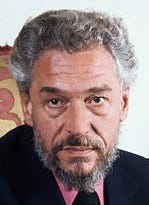
As a person Scofield was as close to a recluse as it’s possible to be. He hated socialising. He turned down parts if he couldn’t get back to his home in Sussex after the show. He refused to go to New York with the NT production of Amadeus and he declined an offer to co-direct the Chichester Festival Theatre with his old friend John Harrison because it would mean having to attend parties. He refused a knighthood (but accepted a CBE and a CH).
The Royal Shakespeare Company members voted his Lear the best performance ever in their history.2 Despite his stern and often intimidating exterior he could portray anguish, desperation, jealousy and humanity seemingly without effort. His verse-speaking was simple yet powerful. He never looked to be playing to the gallery but he reached it nonetheless. He never played for laughs but he got them anyway. He very rarely gave interviews or participated in publicity events, and if anyone tried to over-praise him or gush over his performance he politely closed the door on them.
During his career he worked in commercial theatre, the RSC and the National. He won awards for his stage work and for his appearances on screen. He was loved and revered by his fellow actors across the board. I obviously need to revise my views on him.
. . . and the good
The more I research the topic of great versus good the more pointless it seems. Suffice to say Paul Scofield would never be cast as a factory worker or a miner or anything that suggested working class. Whereas . . .
The class of 1953
In the 1950s a ‘new breed’ of actor was beginning to emerge from drama schools. They tend to get lumped together under the label ‘working class lads’ (and the odd lass): scholarship boys, even hell-raisers – a term that certainly applied to the Irish contingent of Peter O’Toole and Richard Harris – and many of them kept their regional accents. But they were in fact quite a disparate group.
In 1955 RADA’s principal Sir Kenneth Barnes, who’d been there since 1909, retired and handed over to John Fernald, a director who’d already worked extensively in TV and theatre and was aware of how much the mood was changing. Under Sir Kenneth RADA had been often described as a finishing school, churning out well-mannered middle-class boys and girls speaking perfect Queen’s English (my Australian mother was a case in point: she spent two years at RADA in the 1930s eradicating all trace of her colonial accent).
The class of 1953 at RADA included Albert Finney (Salford, Lancs, scholarship), Peter O’Toole (Leeds, Yorkshire, scholarship), Alan Bates (Derby, local grant), and the marginally less well-known but familiar names including Frank Finlay, Peter Bowles, Keith Baxter, John Stride, Roy Kinnear, Brian Bedford, Valerie Singleton and Rosemary Leach. Tom Courtenay (Hull, Yorkshire,) and Glenda Jackson (Cheshire) joined RADA a couple of years later.
Many such as Finney kept their regional accent, others such as O’Toole did not. Some like O’Toole had already worked in other trades and done their two years’ National Service before they went to drama school. What they all had in common was an ability to play working men and women as well as Shakespeare. Frank Finlay (Lancashire, scholarship) said of RADA after he left, ‘We spent days losing our north country accents. Yet within two years of my leaving they had a full-time voice coach teaching the students how to sound as if they came from up north.’3 There was even a reverse snobbery creeping into the theatre establishment. The director Lindsay Anderson said of Peter Bowles, Finlay’s friend and contemporary, “In my opinion [Peter] Bowles can’t act. I know because I’ve seen him wearing a suit.”4
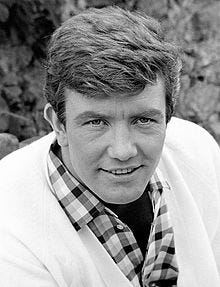
Albert Finney, son of a bookie, was 17 when he entered RADA. He was likeable, disciplined and serious about acting and he was not a hell-raiser. He knew even at that young age exactly where he wanted to go in his career. After the RADA showcase at the end of the course at Her Majesty’s Theatre in 1956 he was wooed by both Tennent’s of the West End and the Rank Organisation, who wanted to sign him up for seven years. He turned them both down and instead went to Birmingham Rep to play for £10 a week.
Finney allegedly avoided National Service by pretending to be mad. He became a household name early on through films such as Saturday Night and Sunday Morning and Tom Jones. Yet he stayed working in theatre on and off throughout his life. At the age of 21 he played Henry V and Macbeth at Birmingham and in the West End he was cast by Charles Laughton in a play called The Party. It was not a big part but when he realised that during his one big speech Laughton became distracted and began scratching his bottom Finney told the producer Harry Salzman, “Tell Mr Laughton that I’ll kick him into the orchestra pit if he fucking does that again.”5
He spent a season at Stratford, where he understudied and went on for Laurence Olivier in Coriolanus. Aged 24 he turned down Lawrence of Arabia because he didn’t want to be made into a star or tied to a five-year contract. He played the title role in Osborne’s Luther at the Royal Court and the West End, likewise in Billy Liar, and the original Bri in Peter Nichols’ A Day in the Death of Joe Egg at the Glasgow Citizens and the West End. At the National he appeared in Shakespeare, Chekov and John Arden and he played Tamburlaine in the opening production in the National’s Olivier Theatre.
When he was playing at Chichester Finney was given a chauffeur-driven Rolls Royce (for insurance purposes), and when he invited some actor friends to dinner he also invited the chauffeur and the cook. At Hampstead Theatre after the opening night of Orphans in 1986 the entire company of 60 repaired to a local Greek restaurant and he served their dinner. “This is no act from one of the finest practitioners in the business,” said Hampstead’s then Artistic Director Michael Attenborough. “It was behaviour that ran through his whole life . . . He democratised every space he went into.”6 Both in the theatre and on films sets he was always on time and word perfect, and he knew all the names of the crew and the backstage and front of house staff. Everyone, it was said, adored him.
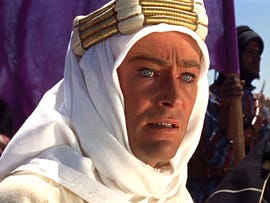
Peter O’Toole meanwhile was the bad boy of the group: rebellious, unreliable, a heavy-drinker from drama school days on. The perhaps apocryphal story goes that at the age of twenty he hitch-hiked from his home in Leeds, via Stratford, sleeping in hedges and on park benches until he found himself outside the RADA building in Gower Street, walked in and happened to bump into Kenneth Barnes, who auditioned him and gave him a place on the spot.7
A lot of what one reads about O’Toole is probable exaggeration. He was a definite hell-raiser, constantly late for rehearsals and on occasion for performances, all thanks to his heavy drinking and wild lifestyle. One wonders if he hadn’t been possessed of such a beautiful face and intense charisma whether any theatre manager would have put up with him.
On leaving RADA O’Toole spent four years at Bristol Old Vic. He replaced Albert Finney in the Royal Court production of The Long and the Short and the Tall when Finney had appendicitis; and when the play transferred to the West End his habit of appearing at the very last minute almost gave his understudy Michael Caine a nervous breakdown. He was not the first choice to play Lawrence of Arabia as we know, and that role changed the game for him completely and turned him into a matinee idol. John Osborne declared O’Toole the best Jimmy Porter he’d ever seen in a revival of Look Back in Anger. He replaced Paul Scofield as Shylock and Petruchio in Peter Hall’s first season at Stratford. He played Hamlet in the National Theatre’s inaugural production at the Old Vic and in the ‘80s he played the title role in Jeffrey Bernard is Unwell, after which he pretty well stuck to television and film.
So he was not just a pretty face.
The story behind the 1980 Old Vic production of Macbeth, in which O’Toole played the title role and had total artistic control, makes for fascinating reading. He hadn’t been on stage for fifteen years and had the wildest ideas of how it should be staged and designed, and his eventual performance won hoots of laughter from the audience and total mockery from the press.8 (I actually saw that production a while after it opened and didn’t think it was that bad: presumably he’d moderated his performance by then.)
If you Google O’Toole on YouTube, which I have done, what you mostly find is interviews on American TV shows about his hell-raising, in particular with his buddy Richard Harris. The antics of the two Irishmen9 look tedious to us now, not to say childish, and it makes it really difficult to discover the ‘true’ Peter O’Toole. (The exception is a thoughtful interview with his actor colleague Kenneth Griffith about Lawrence.10) The cult of drinking before, after and often during a stage performance, which was once so fashionable, also cut short the theatre appearances of actors such as Richard Burton and Anthony Hopkins. At the risk of sounding like a puritan I can’t help feeling all these actors’ careers, successful though they were, weren’t partly wasted – in more ways than one – and the loss is ours as well as theirs.
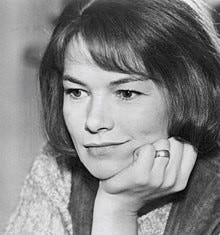
Glenda Jackson (Cheshire) also won a scholarship to RADA a couple of years after the others, along with Diana Rigg. She was out of work for some time on leaving drama school and was turned down by the RSC before Peter Brook eventually cast her as Charlotte Corday in the RSC’s Marat/Sade, followed by US. Again she was far better known for her film roles and her political career and not least, her reappearance at the Old Vic aged 80 playing the title role in King Lear.
According to the film producer Dyson Lovell, who may or may not have been a contemporary of the class of 1955, they had one thing in common: they acted with “A savage truth. They were real . . . Their performances were so truthful and natural.”11 (They also, crucially, had access to scholarships and grants, unlike today.)
They were the pioneers who set the stage for the likes of the slightly younger Judi Dench, Diana Rigg, Vanessa Redgrave, Tom Courtenay, Maggie Smith and further generations down the years until the present day.
Coming next: The end of censorship
Sources
Richard Eyre, National Service: Diary of a Decade at the National Theatre
Gabriel Hershman, Strolling Player: The Life and Career of Albert Finney
Robert Sellers, Don’t Let The Bastards Grind You Down
Robert Sellers, Peter O’Toole, The Definitive Biography
Timothy West, The King of Comedy, The Guardian 7 April 2001. https://www.theguardian.com/books/2001/apr/07/books.guardianreview
‘Picture Parade’ 1960. Interview with Albert Finney and Robert Robinson. https://www.youtube.com/watch?v=fF7rFi5V0sY
BBC Monitor, Classic Celebrity Interviews. Peter O’Toole and Kenneth Griffith. https://www.youtube.com/watch?v=LTMeRPPeGFw
BBC Area documentary on Paul Scofield. https://www.youtube.com/watch?v=06P8NnPSAGI
National Service: Diary of a Decade at the National Theatre, Richard Eyre
BBC Arena documentary on Paul Scofield. https://www.youtube.com/watch?v=06P8NnPSAGI
Strolling Player, Gabriel Hershman
Don’t Let the Bastards Grind You Down, Robert Sellers
Strolling Player
Ibid
Don’t Let the Bastards Grind You Down
The King of Comedy by Timothy West, The Guardian 7 April 2001. https://www.theguardian.com/books/2001/apr/07/books.guardianreview
O’Toole was actually born in Yorkshire to Irish parents but always identified as an Irishman.
BBC Monitor. Classic Celebrity Interviews. https://www.youtube.com/watch?v=LTMeRPPeGFw
Cited in Don’t Let the Bastards Grind You Down, Robert Sellers